Letter S in Morse Code (...)
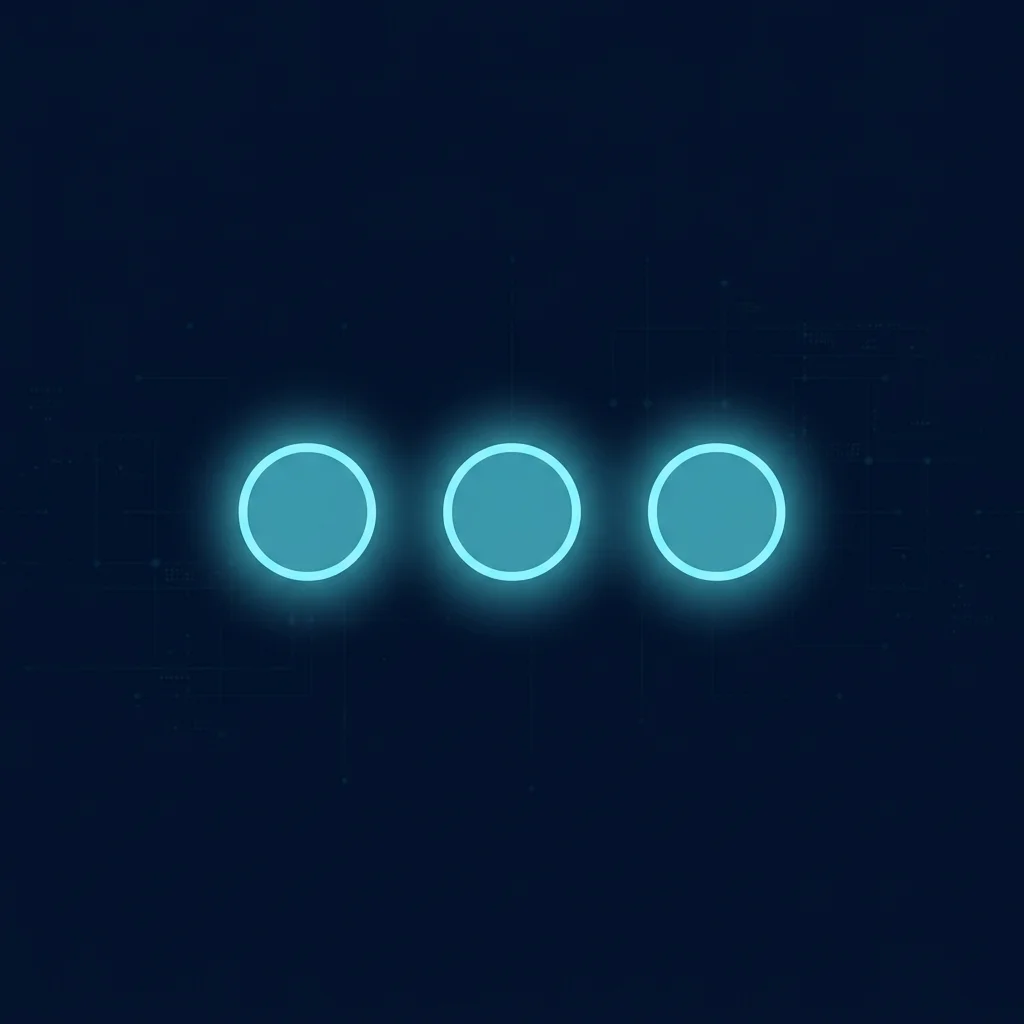
The **letter S in Morse code is `...` — three dots**. It contains no dashes: just three short, evenly spaced signals. When Morse is spoken aloud for practice, the rhythm is commonly expressed as **dit-dit-dit**.
How Many Signals Are in S?
The Morse code for S contains exactly three elements, and all three are dots:
S → ...
Because every signal has the same duration, S has a simple, even rhythm. The main challenge for a learner is usually distinguishing the number of short signals when similar dot-only letters are sent quickly.
S and the All-Dot Morse Letters
S belongs to a useful sequence of Morse letters made entirely from dots:
- E —
.— one dot - I —
..— two dots - S —
...— three dots - H —
....— four dots
Each letter in this sequence adds one dot.
That gives you a simple relationship to remember instead of treating S as an isolated pattern: E, I, S, and H progress from one dot to four dots.
What Does S Sound Like in Morse Code?
S has a quick, even rhythm:
dit-dit-dit
Each dot has the same duration, with equal short gaps between the three signals.
There is no dash inside S, so the rhythm stays consistent from beginning to end.
If you want to produce this pattern yourself, use the Morse code keyboard to tap and hear Morse signals directly.
Timing the Letter S
Standard Morse timing uses a dot as the basic time unit.
For the letter S:
| Part | Duration |
|---|---|
| First dot | 1 unit |
| Internal gap | 1 unit |
| Second dot | 1 unit |
| Internal gap | 1 unit |
| Third dot | 1 unit |
From the beginning of the first dot to the end of the third dot, S occupies 5 timing units.
After the character is complete, the normal spacing between letters is 3 units before the next letter begins.
The important part when sending S is consistency: three short signals with equal spacing between them.
Sending S Correctly
When tapping or keying S, send three short signals of equal length.
Try not to stretch the gaps between the dots. If the spacing becomes too long, the signals may stop sounding like one continuous character.
A useful practice rhythm is simply:
dit-dit-dit
Start slowly enough to keep the timing even, then increase speed as the complete sound becomes familiar.
S vs. H in Morse Code
S and H are useful letters to compare because both use only dots:
S → ...
H → ....
S has three dots.
H has four dots.
When learning by sound, focus on recognizing the complete rhythm. At slower speeds, counting the three versus four short signals can also help confirm which character you heard.
The Morse code trainer can help you practice recognizing S, H, and other Morse patterns by sound.
Examples of S in Morse Code
Here are a few simple examples containing the letter S.
SOS
SOS → ... --- ...
The first and last groups are S (...), while the middle group is O (---).
This creates a clear contrast between three short signals and three long signals.
SUN
SUN → ... ..- -.
- S →
... - U →
..- - N →
-.
YES
YES → -.-- . ...
- Y →
-.-- - E →
. - S →
...
These examples also show why spacing matters. Morse elements form individual characters, while a longer gap separates one letter from the next.
Quick Reference for S
- Letter: S
- Morse code:
... - Dots: 3
- Dashes: 0
- Elements: 3
- Sound: dit-dit-dit
- Useful comparison: H (
....)
For the complete A–Z reference, numbers, and punctuation, see the Morse code alphabet.
You can also use the Morse code translator when you want to convert complete words or sentences instead of a single letter.
Frequently Asked Questions
Keep Learning
Try S in a complete message with the main Morse Code Translator.