Q in Morse Code (--.-)
**Q in Morse code is `--.-` — dash-dash-dot-dash.** It contains four signal elements: two long signals, one short signal, and a final long signal. When spoken during Morse practice, its rhythm is commonly expressed as **dah-dah-dit-dah**.
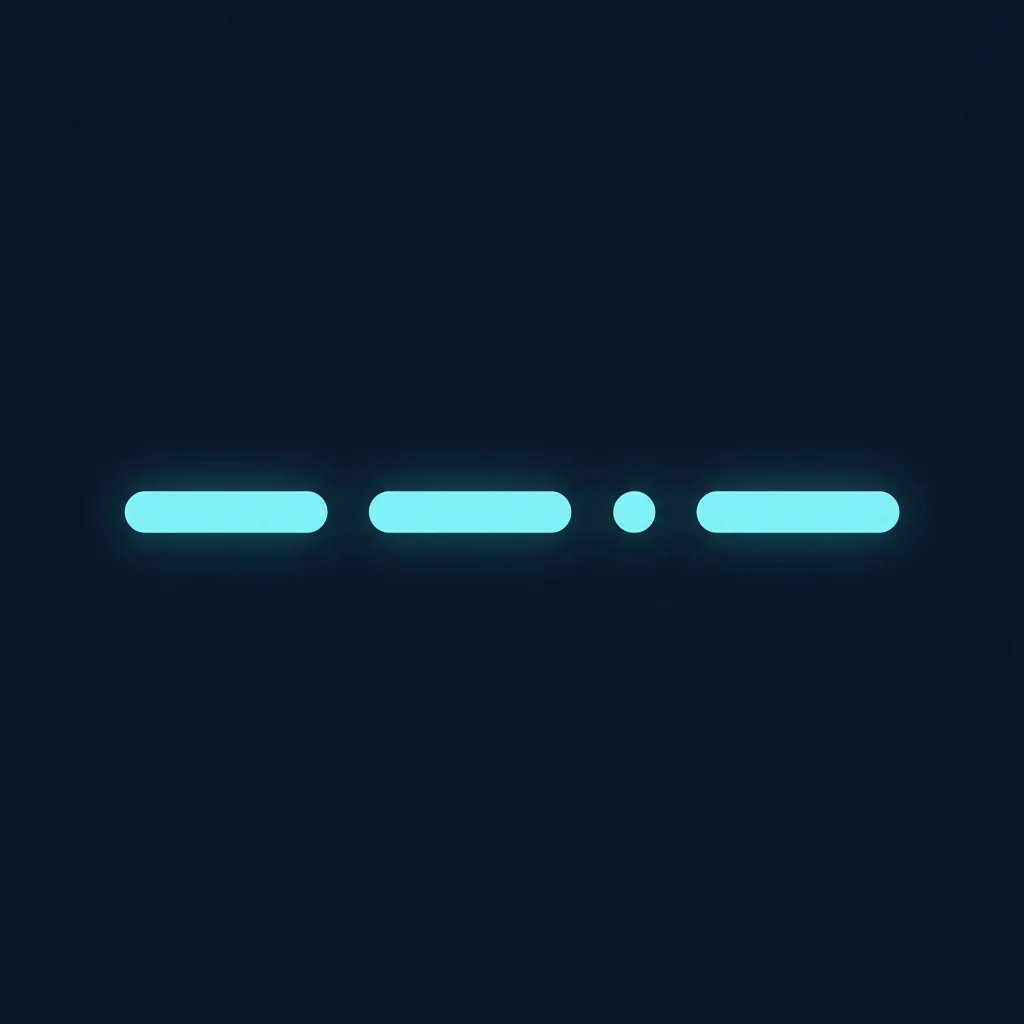
The Q Morse Code Pattern
The pattern for Q is:
Q → --.-
Its four elements appear in this order:
dash → dash → dot → dash
Three of Q's four elements are dashes, with the single dot appearing in the third position.
Quick Pattern
| Detail | Q |
|---|---|
| Morse code | --.- |
| Elements | 4 |
| Dots | 1 |
| Dashes | 3 |
| Spoken rhythm | dah-dah-dit-dah |
What Does Q Sound Like in Morse Code?
Q has the rhythm:
dah-dah-dit-dah
The first two signals are long, the third is short, and the final signal returns to a long dash.
The short third element is the key feature of the pattern.
Rather than counting symbols individually, try to hear Q as one complete long-long-short-long rhythm.
Timing the Letter Q
Standard Morse timing uses a dot as one time unit.
For Q:
- first dash = 3 units
- internal gap = 1 unit
- second dash = 3 units
- internal gap = 1 unit
- dot = 1 unit
- internal gap = 1 unit
- final dash = 3 units
Written as signal and silence:
ON(3) OFF(1) ON(3) OFF(1) ON(1) OFF(1) ON(3)
From the beginning of the first dash to the end of the final dash, Q occupies:
3 + 1 + 3 + 1 + 1 + 1 + 3 = 13 timing units
Its active signal time is:
3 + 3 + 1 + 3 = 10 units
After Q is complete, the standard gap before the next letter is 3 units.
The important part when sending Q is preserving the short third element. It should remain clearly shorter than the three surrounding dashes.
How to Send Q Correctly
When keying or tapping Q, use this rhythm:
long — long — short — long
Keep the three dashes equal in duration and make the third element clearly shorter.
The internal gaps should remain consistent throughout the character.
A useful practice rhythm is:
dah-dah-dit-dah
Start slowly enough to preserve the contrast between the short dot and long dashes, then increase speed while continuing to hear the pattern as one complete character.
Q vs. Y in Morse Code
Q and Y contain the same number of dots and dashes:
Q → --.-
Y → -.--
Each has:
- three dashes
- one dot
- four total elements
The difference is the position of the dot.
In Y, the dot is second:
dash-dot-dash-dash
In Q, the dot is third:
dash-dash-dot-dash
Listening for where the short signal appears is the simplest way to separate the two patterns.
Q and G in Morse Code
G is:
G → --.
Q is:
Q → --.-
The first three elements are identical.
Q extends G by adding one final dash.
That makes the ending important: if --. stops after the dot, the character is G. If another dash follows within the same character, it becomes Q.
Q and Amateur-Radio Q Codes
The letter Q has an additional connection to radio communication because many standardized Q signals begin with Q.
The Q Code was developed as a compact system for radio communication, and many Q signals remain familiar in amateur-radio operation.
Examples include:
- QRZ — “Who is calling me?”
- QRM — asks whether a transmission is being interfered with
- QSO — asks whether direct communication with another station is possible
A Q signal written or transmitted without the question form can serve as the corresponding statement or answer according to the established procedure.
For a Morse learner interested in amateur radio, recognizing Q therefore becomes useful not only as an alphabetic character but also as the opening element in many operational abbreviations.
Examples with Q in Morse Code
Here are several useful examples containing Q.
QSO
QSO → --.- ... ---
- Q →
--.- - S →
... - O →
---
In amateur-radio conversation, “QSO” is also commonly used when referring to a radio contact.
QRZ
QRZ → --.- .-. --..
- Q →
--.- - R →
.-. - Z →
--..
QRZ is the Q signal meaning:
Who is calling me?
QUIT
QUIT → --.- ..- .. -
- Q →
--.- - U →
..- - I →
.. - T →
-
QUEEN
QUEEN → --.- ..- . . -.
- Q →
--.- - U →
..- - E →
. - E →
. - N →
-.
These examples give Q several different contexts: radio abbreviations as well as ordinary English words.
Practice Q by Sound
Memorizing --.- visually is useful, but sound recognition becomes more practical when you begin to hear:
dah-dah-dit-dah
as one complete rhythm.
The Morse code trainer can help you practice Q together with other Morse characters.
For the complete A–Z reference, see the Morse code alphabet.
Quick Reference for Q
- Letter: Q
- Morse code:
--.- - Elements: 4
- Dots: 1
- Dashes: 3
- Sound: dah-dah-dit-dah
- Timing length: 13 units from first signal start to final signal end
- Useful comparison: Y (
-.--) - Shorter related pattern: G (
--.) - Radio connection: Q signals such as QRZ, QRM, and QSO
Frequently Asked Questions
Keep Learning
Try Q in a complete message with the main Morse Code Translator.