How Does Morse Code Work? Dots, Dashes, and Timing Explained
Curious how Morse code actually works? Learn the timing rules, the full alphabet, real decoding steps, and why this 1830s system still matters today.
Kalana Sandeep
Creator of Morse Code Translator
How Does Morse Code Work?
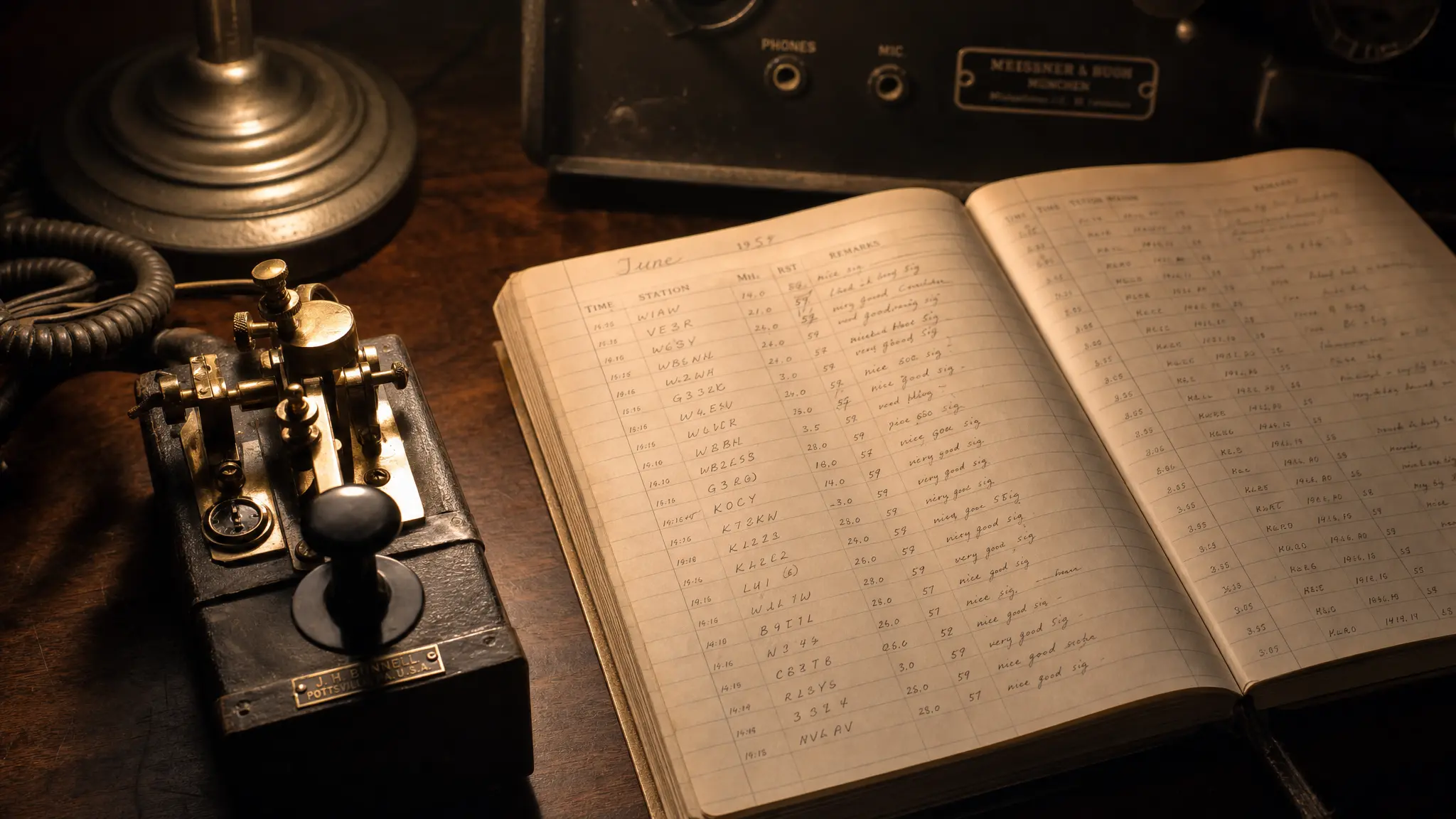
But once you peel away the mystery, Morse code is simply a method of translation. Each letter, number and punctuation mark is turned into a series of short and long signals, and those signals can go through just about anything: sound, light, radio waves or even a tap on the table. But it's not the symbols in themselves that make it work. It is the time difference between them.
Want to see the timing visually? Try the Morse Code Light Translator to send or decode Morse with flashing light.
So how exactly does that work — and in particular, let's focus on the part where most explanations gloss over?
The Real Engine Behind Morse Code: Timing, Not Symbols
People usually picture Morse code as dots and dashes on a page. In practice, it's sound and silence, or light and darkness, arranged according to strict proportional timing. Get the timing wrong and even a correctly chosen pattern becomes unreadable.
Here's the rule set that makes the whole system function:
| Element | Length |
|---|---|
| Dot (dit) | 1 unit |
| Dash (dah) | 3 units |
| Gap within a letter | 1 unit |
| Gap between letters | 3 units |
| Gap between words | 7 units |
A "unit" is not a fixed time period. It scales with speed. A fast operator may use a fraction of a second per unit, while a beginner practicing by hand may use a much slower pace. As long as every signal scales with the others, what matters is that the timing relationship between signals remains consistent. Provided that any dash is, give or take, three times as long as a dot and the gaps scale in the same way then it doesn't matter how fast or slow you send your message — it'll always be readable.
Want to try the timing yourself? Use the Morse Code Keyboard & Telegraph Key Simulator to send dots and dashes with a Spacebar, mouse or touchscreen.
Beginners often make dots and dashes uneven in length, especially when nervous or rushing. A dash of very little longer than a dot makes the listener guess, and guess what Morse code is intended to eliminate.
Where the Idea Actually Came From
Morse code was not developed in a pure abstraction of communication theory. It arose out of necessity. In the 1830s Samuel Morse was developing an electrical system of sending messages over a line and required a code that be learned quickly, reliably transmitted by hand.
He did not build it alone. Alfred Vail played a major role in improving the system. He helped create the letter assignments by studying how frequently letters appeared in English text. It is why E, the commercially most prevalent letter in English, receives the simplest code (dot) of all while rarer (and more complex) letters like Q and J incur longer sequences. Just like efficiency, it is a trick – baked into the alphabet.
The first public demonstration of long-distance Morse communication took place between Washington, D.C., and Baltimore in 1844. This is a famous quote in the history of communication-it was the point when instant long-distance messaging became feasible for the first time.
The Full Alphabet and Number System
Once you understand the timing rules, the actual alphabet is just memorization. Here's the complete reference:
| Letter | Code |
|---|---|
| A | · − |
| B | − · · · |
| C | − · − · |
| D | − · · |
| E | · |
| F | · · − · |
| G | − − · |
| H | · · · · |
| I | · · |
| J | · − − − |
| K | − · − |
| L | · − · · |
| M | − − |
| Letter | Code |
|---|---|
| N | − · |
| O | − − − |
| P | · − − · |
| Q | − − · − |
| R | · − · |
| S | · · · |
| T | − |
| U | · · − |
| V | · · · − |
| W | · − − |
| X | − · · − |
| Y | − · − − |
| Z | − − · · |
Numbers 0 through 9
| Number | Code |
|---|---|
| 0 | − − − − − |
| 1 | · − − − − |
| 2 | · · − − − |
| 3 | · · · − − |
| 4 | · · · · − |
| 5 | · · · · · |
| 6 | − · · · · |
| 7 | − − · · · |
| 8 | − − − · · |
| 9 | − − − − · |
Notice the pattern in the numbers: as the digit gets higher, the dashes at the start increase and the dots pile up at the end. It's a genuinely elegant bit of design once you see it.
The @ symbol wasn't part of Morse code's original design. It was formally added by the International Telecommunication Union in 2004, more than a century and a half after the code was created, specifically because email addresses needed a way to be transmitted.
How to Actually Decode Morse Code by Ear
Reading Morse code does not involve memorising shapes as you would memorise letters on a page. It is akin to recognizing a rhythm – like you would identify a song by its beat before consciously recognizing the notes themselves.
A practical decoding approach looks like this:
- Listen for groups, not individual signals. Trying to count every dot and dash in real time is exhausting and error-prone. Instead, let your ear absorb the whole rhythmic shape of a letter, the way you recognize a word by its overall sound rather than spelling it out.
- Use the pauses as your anchor.The gaps between signals are just as important as the signals themselves. A short gap means you're still inside the same letter. A longer gap means a new letter is starting. A very long pause means a new word.
- Don't stop to double-check yourself mid-message. Hesitating to confirm a letter you already heard will make you miss the next one. Trust your first read and correct later if needed.
- Practice at a fixed, comfortable speed before trying to go faster.Consistency matters more than speed when you're building the skill.
Experienced radio operators often describe fluent Morse reading as feeling less like translation and more like understanding spoken language directly, the dots and dashes essentially disappear and you just "hear" the word.
From Wires to Radio Waves: How Morse Code Traveled
Morse code was developed over electrical pulses travelling through actual telegraph lines. The sender would press a key to complete the circuit for an instant (dot) or slightly longer (dash), and a recipient miles away might hear that pulse as a click or see it inked on paper.
Radio revolutionized the distance Morse could go, but not how it worked. When wireless transmission became practical in the early 1900s, operators continued to use the same dot-dash system over radio waves instead of copper wire. That is part of why Morse code outlived the telegraph that sent it. The code was never uniquely associated with one specific device, only to a means of separating transmission from silence.
Essentially, American Morse code (actually the version used within the continental United States) used different timing rules and spacing conventions compared with International Morse. International Morse code, created to bring global uniformity in communication, took those inconsistencies and morphed them into a cleaner, universally taught version. When people say "Morse code" today, they practically always mean the international standard.
Why the SOS Pattern Works So Well
SOS is primarily worth mentioning because it shows Morse design principles at work. The signature has three dots, three dashes, and the other three dots: · · · − − − · · ·
It was officially recognized as an international signal of distress in 1906 because of its brevity, symmetrically and resistance to interference even during a noisy or weak radio reception. It is not an abbreviation for "Save Our Souls" or "Save Our Ship." Those phrases were then used as mnemonic devices, rather than the initial meaning. The actual reason it was chosen is more pragmatic: static survives simplicity better than it does clever.
Where Morse Code Still Gets Real Use
It's easy to assume a system built in the 1830s has nothing left to offer, but that's not quite accurate.
- Aviation: Many navigation beacons still transmit Morse identifiers for pilots to verify they are tuned into the correct station, a layer of redundancy that does not rely on GPS.
- Amateur radio: Basically, CW (short for continuous wave), which indeed is Morse code sent through the radio — remains popular precisely because it can cut through weak or garbled signals that would completely destroy voice communication.
- Emergency and survival signaling: When you think about it, SOS still functions with a flash light, a whistle or reflective surface and that means the world when no electronic devices are working.
- Assistive communication technology: The code, which requires a single reliably controllable input that can be sensed, has enabled people with severe motor impairments to type and communicate using single-switch systems based on Morse principles.
Unless you have been practicing Morse code your entire life, do not make it your only emergency communication plan. In a true emergency, the adrenaline and stress of doing something you have never done makes that skill much harder to pull off. You can still learn Morse code for preparedness, but real fluency requires practice before an emergency happens.
Getting Started: A Realistic Learning Path
Trying to memorize all 26 letters and 10 numbers at once is the most common reason people give up on Morse code early. A more sustainable approach:
- Start with the shortest, simplest letters, E and T, then build outward.
- Learn by sound first, not by staring at dot-dash symbols on paper. Your ear needs to recognize rhythm, and visual memorization doesn't transfer well to real listening.
- Practice in short, frequent sessions rather than long, occasional ones. Ten focused minutes daily builds recognition faster than an hour once a week.
- Use a Morse code translator to check your own accuracy as you go, typing out a word and comparing it against what you produced by hand or ear.
The Bottom Line
Everything else — letters, numbers, SOS signals, and its journey from telegraph wires to radio waves — comes from this simple idea. Nearly two centuries later, Morse code continues to work because its original design was remarkably efficient.
Try our online Morse Code Translator or practice ear-decoding with the Koch method trainer directly in your browser.
Ready to practice? Try our new global translator to generate code morse code instantly.
Frequently Asked Questions
Q:But how does Morse code actually work?
Morse code encodes text characters as sequences of short (dot) and long signals (dash), separated with precise periods of silent time. A dash is three times longer than a dot, and the duration of spaces tells the recipient if they remain within one letter, are stepping to another letter, or are embarked on a new word.
Q:What is the rule as to timing when sending Morse code?
Dot = the duration of one time unit. Dash = three units of duration. Gap between parts of same letter = 1 unit. Gap between different letters = 3 units. Gap between words = 7 units.
Q:How come the E is only a dot in Morse?
E is the most common letter in English (and almost every other language) and Morse was designed so that more frequent letters are given shorter, faster to send patterns. This helps make the entire system easier to transmit.
Q:How American & International Morse code differ?
This American Morse code was the first one in use on U.S. telegraph lines and had unregimented timing, with some remarkably long dashes. That system was then standardized and simplified into International Morse code, which is the version in common use throughout the world today.
Q:Are there real scenarios where Morse code is used?
Yes. It remains in use today for aviation navigation identifiers, amateur radio communication, maritime and survival emergency signaling, & aiding people with limited mobility or speech.